
You have a Houston garage gathering dust while you search for ways to house aging parents or generate rental income. Transforming that concrete box into comfortable living space requires much more than a weekend DIY attempt.
Industry experts recommend the “Home-Plus” strategy for these renovations. This approach treats your new Accessory Dwelling Unit (ADU) as a secondary nervous system, safely integrating shared utilities with your main house. Top-tier garage apartment builders master this delicate structural balance daily to avoid overloading your existing electrical and plumbing panels.
Navigating complex ADU zoning requirements unlocks three distinct benefits: immediate rental cash flow, multi-generational flexibility, and boosted resale value. Here is how the right professional maps your journey from simple car storage to a high-yield asset.
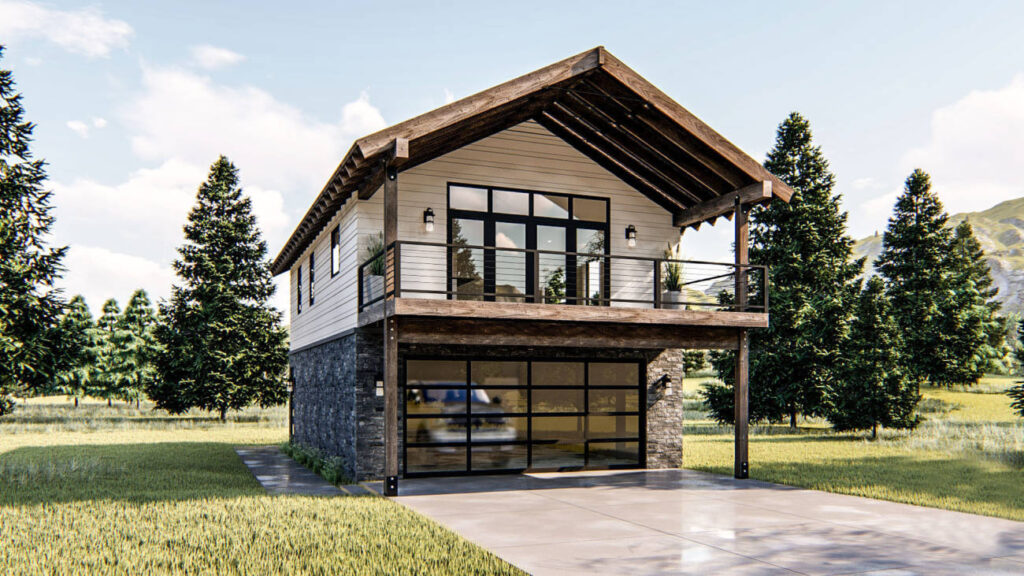
Source: Advanced House Plans https://advancedhouseplans.com/plan/arapahoe
Navigating Houston’s ADU Zoning: What Your Builder Must Know Before They Dig
Building an apartment over your garage in Houston isn’t as simple as staying inside your property lines. Because the city lacks traditional zoning, local building codes for detached secondary dwellings are governed by Chapter 42 ordinances. Think of Chapter 42 as the master rulebook dictating your mandatory off-street parking spaces and structural setbacks.
Even if city rules approve your design, hidden neighborhood roadblocks can instantly halt the permitting process for backyard living spaces. Deed restrictions act as strict private property laws that might ban second kitchens entirely. Before drawing blueprints, your builder must request these critical documents:
- Official neighborhood Deed Restrictions
- A recent boundary property survey
- Chapter 42 setback compliance data
- An ADU zoning requirements checklist
Clearing these legal hurdles establishes your boundaries and shifts the focus directly to physical construction and timeline management.
Modular vs. Stick-Built: Choosing the Construction Path That Fits Your Timeline
With property lines legally cleared, finalizing your detached garage with living quarters construction comes down to two methods: traditional stick-building or modular. Houston’s high humidity makes modular units incredibly appealing. Because these structures are assembled inside climate-controlled factories, lumber is never exposed to sudden downpours during framing.
However, traditional stick-built methods remain the standard for perfectly matching your main home’s unique architectural details. When comparing modular vs. stick-built garage apartments, consider these core trade-offs:
- Timeline: Modular structures save weeks by assembling off-site simultaneously with site prep.
- Cost: Factory builds lock in exact pricing, while stick-building offers mid-project flexibility.
- Customization: Stick-built methods allow limitless on-site design adjustments to match historic neighborhoods.
Regardless of whether a crane drops a finished unit into your yard or a crew hammers every stud by hand, the new weight demands a solid base.
Why Your Old Garage Floor Isn’t Ready for a Kitchen: Foundation and Plumbing Realities
A standard concrete slab works fine for cars, but living spaces change the structural math. To safely support heavy appliances and people, builders evaluate the load-bearing capacity of your existing frame. Meeting strict foundation requirements for two-story garage additions usually means digging trench-and-pour footings—deep underground concrete anchors that prevent structural failure.
Next, contractors tackle the complex shared nervous system of utilities. Designing garage apartment floor plans with plumbing requires careful strategy to successfully connect to your main sewer line. Rather than destroying the entire backyard with a backhoe, specialized builders use targeted, minimal-dig methods to seamlessly thread new water pipes underground.
Electricity introduces another critical lifestyle choice. Many property owners opt for sub-metering, a clever wiring approach that tracks the apartment’s energy usage independently from the main house. This simple setup drastically simplifies utility bills when running power-hungry appliances or independent climate control systems for detached units throughout the changing seasons.
These hidden structural upgrades demand upfront capital, transforming a fragile outbuilding into a durable home. This physical durability directly secures your long-term rental gains and overall return on investment.
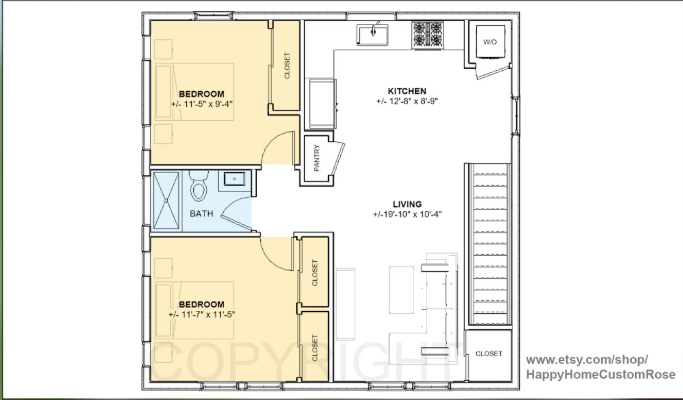
Credit: Happy Home Design Store https://www.etsy.com/listing/1499692629/30-x-30-two-bedroom-garage-apartment
The ROI of a Carriage House: Balancing Construction Costs with Long-Term Rental Gains
Determining how much building a carriage house costs means calculating your payback period—the time required for new rental income to cover your construction expenses. For typical Houston projects, this takes five to eight years. Afterward, the rent becomes pure profit, making the return on investment for garage conversions highly attractive.
To boost rental yield—the annual cash generated versus the unit’s value—you must design strategically. Adding a habitable unit increases property taxes, but you can offset this by maximizing rental income from secondary suites using smart mother-in-law suite design ideas. The top three design features that increase rental yield in Houston include:
- In-unit laundry: Renters willingly pay a premium for daily convenience.
- Dedicated parking: Guaranteed off-street spots are highly valued.
- Private patios: Small fenced outdoor spaces create a standalone home feel.
Achieving these financial milestones requires flawless execution and partnering with a specialized contractor who protects your investment.
Vetting Your Builder: 5 Non-Negotiables for a Stress-Free Houston Build
Choosing a qualified ADU construction company requires finding a true specialist, not just a general remodeler. Dedicated garage apartment builders understand complex utility tie-ins and strict local zoning. Always run a “Proof of Permit” check by requesting copies of their recently approved Houston ADU permits before signing anything.
Verifying Texas-specific coverage protects your investment. Ensure they provide Builder’s Risk Insurance, a policy covering the new structure if a fire or storm hits mid-construction. Also, demand lien waivers to prevent a Mechanic’s Lien—a nasty legal claim against your property if the builder fails to pay their subcontractors.
Call past clients and ask these five revealing questions:
- Did they carry valid Builder’s Risk insurance?
- Were subcontractors paid promptly to avoid liens?
- Did they install the best soundproofing materials for living above a garage?
- Did they pass city permit inspections easily?
- Would you trust them again?
With the right builder secured, you can confidently draft a precise timeline for breaking ground.
Your 90-Day Blueprint for Breaking Ground in Houston
You no longer have to stare at that unused space wondering where to begin. Mastering the typical Houston construction cycle cures analysis paralysis, transforming an initial concept into a viable construction plan.
To successfully navigate local requirements, review a comprehensive site checklist and interview specialized garage apartment builders. Their expertise guides you through the crucial four-step sequence of designing, permitting, building, and achieving a passed final inspection. Take your first tangible step today by contacting a local site surveyor to accurately map your property boundaries.
